
North Carolina Traffic Court Records
Traffic citations in North Carolina are usually heard as infractions or misdemeanors in District Court. Magistrates take certain pleas. They also handle the first steps. A ticket written on a city street still goes through county court. The state has no municipal-court tier that replaces it. Each county's Clerk of Superior Court keeps the traffic records for both District and Superior Court.
Two statewide tools help with a case lookup. The North Carolina eCourts Portal can surface eligible cases. Citation Services offers ticket search plus selected transactions. A docket entry may list the charge, settings, plea, disposition, costs, or orders. NCDMV keeps driving history separately. Search with the citation or case number first. Then use the county directory to confirm a date, file, or result with the court.
North Carolina Citation Services Search
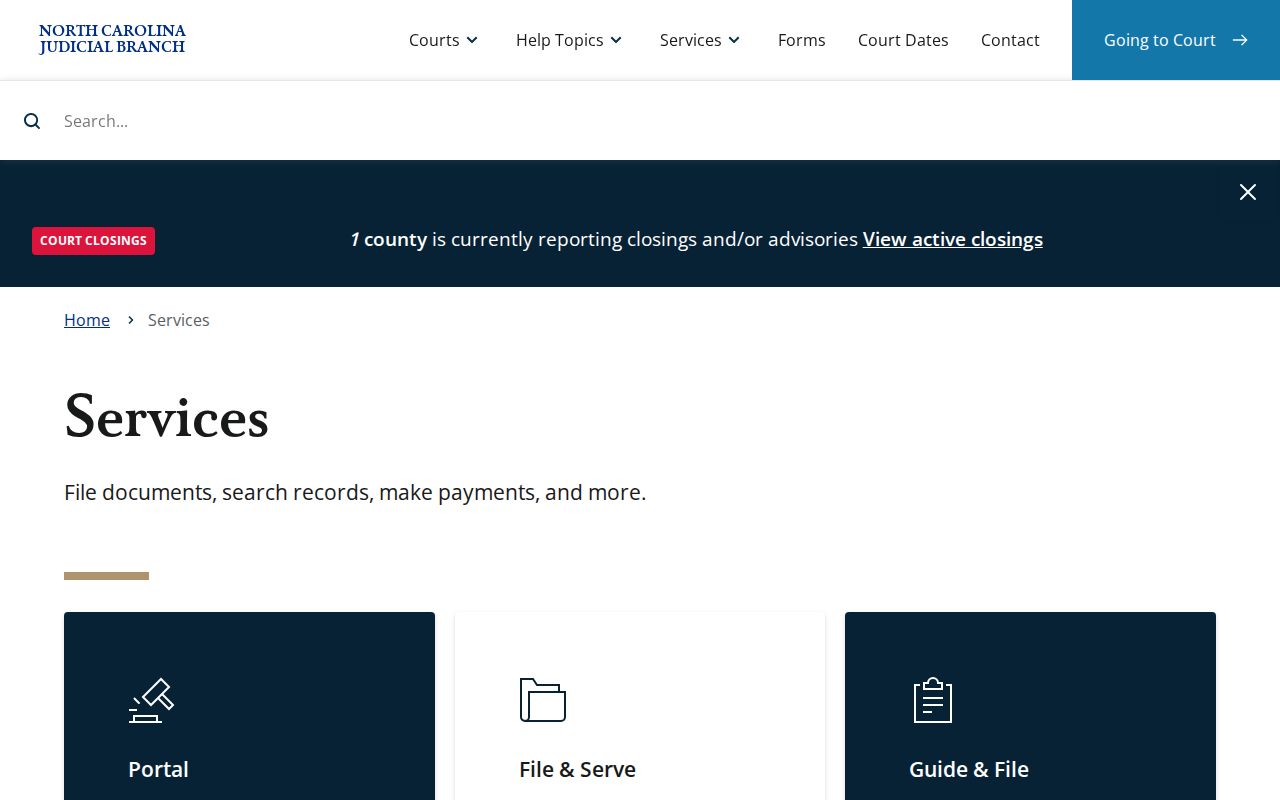
The North Carolina Judicial Branch's dated instructions walk through a Services tile, a Find My Citation action, and a Citation Lookup form. You can search by ticket number, one citation at a time. Or switch to the separate Citation Query by Defendant Name link. A match may show name and address, citation number, and issue date. The sample values in the guide are test data.
The services area may also let you pay, request a reduction, prove compliance, or ask for dismissal. Eligible cases can also be paid through court collections. What you see depends on the ticket and the court. Labels and options on the live form may differ from the dated guide. Treat the instructions as a map rather than a mirror. The Judicial Branch online court services page links these tools and shows what each one covers. For local procedures, contact the county clerk.
Once a citation turns up, take its county and case number to the court docket. If an entry seems missing, ask the clerk in the North Carolina county where the ticket was filed.
North Carolina Citation and License-Hold Systems
Two systems, two jobs. The North Carolina Portal shows public trial-case information, while Citation Services looks up tickets and handles eligible transactions. Courts report certain missed appearances or nonpayments to NCDMV, which tracks license status. Driver records never replace the county docket.
| System | What It Holds | Run By |
|---|---|---|
| North Carolina eCourts Portal | Public state trial-court case details and traffic cases when available. | North Carolina Judicial Branch; platform hosted by Tyler. |
| Citation Services | Citation-number or defendant-name lookup and eligible ticket transactions. | North Carolina Judicial Branch. |
| Failure-to-appear/pay reporting | Court notices to NCDMV after statutory conditions are met. | County court reports; North Carolina Division of Motor Vehicles acts on the license. |
| Driver history and license status | Driving-history information, license status, and restoration steps. | North Carolina Division of Motor Vehicles. |
A court outcome in North Carolina can be reported to NCDMV. Use the docket for citation activity and NCDMV for current license or restoration status.
When a North Carolina Citation Is Missing
A ticket written yesterday may not show up yet. The North Carolina Judicial Branch lists three reasons a search returns no match. A court appearance is required. The citation has not been entered. Or a data-entry error blocks the match. So recheck every digit. Wait a few days if the citation is brand new. If the number is smudged or unclear, try the name query instead. Remember, a no-result reply is not proof that a ticket was cancelled or paid.
Say the citation appears in the Portal but the hearing is murky. Open the case's Hearings section and compare it with the paper notice. Still stuck? Call the county Clerk of Superior Court listed on the ticket. Or use the county directory to find the filing county. Ask whether the clerk can see the citation in the case system. Does it await entry? Is an appearance required? A public courthouse terminal searches the same official case service.
When you call, have the citation number, printed name, issue date, and county ready. The clerk holds the court file. NCDMV answers license questions.
Looking Up a North Carolina Traffic Ticket
Start with the citation number if you have it. No number? The North Carolina Judicial Branch instructions describe a name query. Once you know the filing county, check the date and case history there; tickets issued on city streets go through county District Court in North Carolina.
- Read the ticket for its citation number, issuing county, court date, and instructions.
- Try Citation Services with the citation number. If needed, use its defendant-name query; do not copy sample names from a guide.
- Open the matching Portal case and note its case number, Register of Actions, hearing, and disposition.
- Use the county directory to locate the Clerk of Superior Court for the filing county if a record is missing or a date needs confirmation.
- If the case is appealed, search its separate appellate docket.
Citation Services, Portal search, clerk terminals, and the clerk counter each answer different questions. One route may not cover what another handles.
North Carolina Failure-to-Appear Holds
Missed dates in North Carolina follow a court-to-DMV path. Under G.S. 20-24.2, a court reports a motor-vehicle case. That happens when the person does not appear. It also happens when the charge is not disposed of within 20 days after the scheduled appearance. Failure to pay also triggers a report. A court-ordered fine, penalty, or costs gets reported after 40 days from the date in the judgment. G.S. 20-24.1 covers license revocation after the report. The order takes effect on the 60th day after it is mailed or delivered.
Ask the county Clerk of Superior Court what court action remains open. Once the case is updated, check NCDMV for any notice, fee, or eligibility step. Processing takes time, and payment confirmation alone may not show that a hold has cleared.
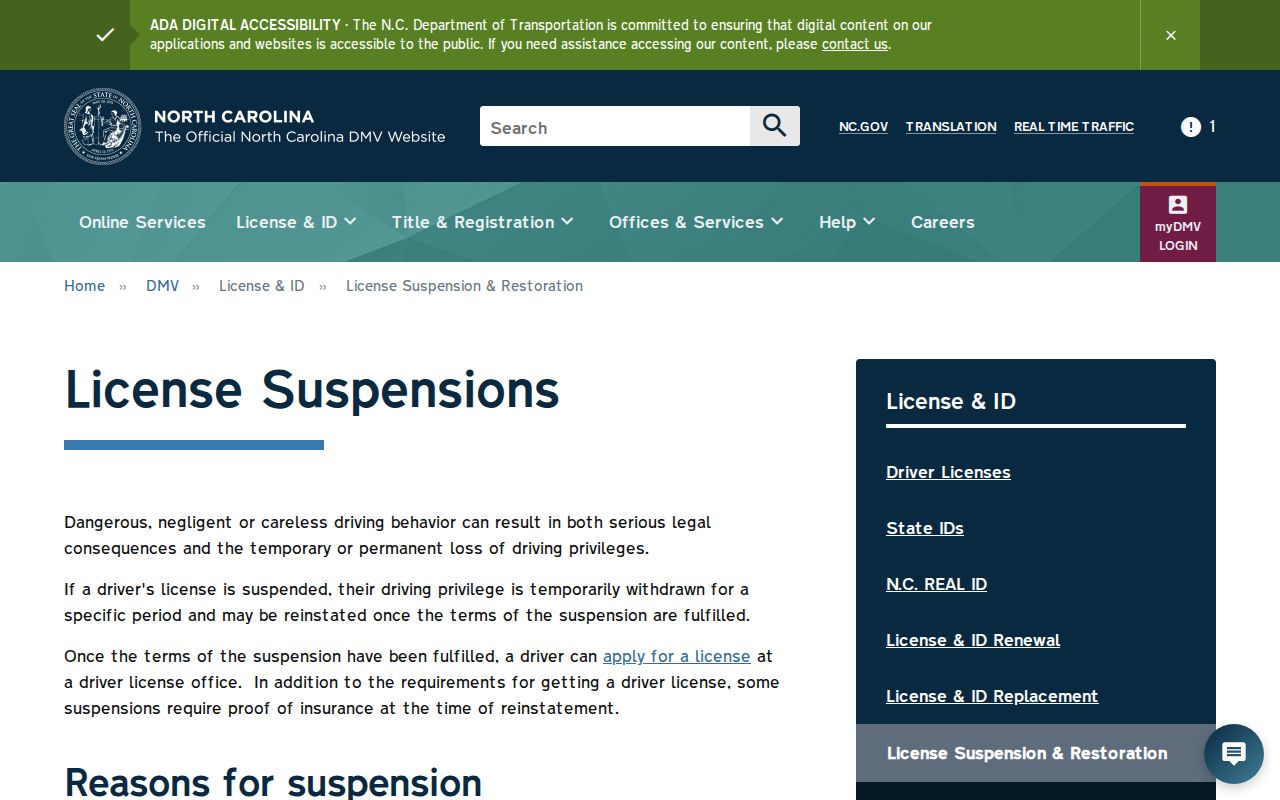
The Judicial Branch's traffic-violation instructions describe missed-date and payment procedures. NCDMV's license-restoration page explains current restoration steps. The agency page that follows is informational, not a court docket.
Resolve the citation with the court, then confirm license status with NCDMV.
Paying or Fighting a North Carolina Ticket
Read the ticket itself first. It tells you what steps to take before anything else. Some North Carolina offenses can be waived by paying. Others demand a court appearance. Paying a waiver means admitting responsibility and giving up your trial. Plead not guilty instead. The case then lands in District Court. Whether a charge gets reduced or a Prayer for Judgment Continued is granted rests with the judge and the facts of the case.
| Paying the Ticket | Contesting the Ticket |
|---|---|
| Pay or waive | Enter a not-guilty response or appear as the citation directs. |
| A waivable offense may be resolved by the due date through an authorized path. | The ticket or court notice controls the appearance date; ask the clerk if instructions conflict. |
| Eligible tickets may use Citation Services, an approved clerk payment, or the mailing method listed by the court. | The case is set in the county District Court; the county clerk can confirm scheduling and filing steps. |
| Payment of a waivable offense generally waives trial and is treated as an admission of responsibility. | A hearing or trial gives the court a chance to decide the charge; ask a lawyer for advice about a specific case. |
Missed court date or payment: FTA may prompt a DMV report after 20 days; unpaid court-ordered amounts after 40. Resolve the case with the county clerk, then confirm license status with NCDMV.
The North Carolina Judicial Branch recommends finishing any online payment early. Give it at least 24 hours before your court date. A mailed waiver needs the citation section signed and dated, plus an approved payment form. Never mail cash or a personal check. Has your date already passed? Call the clerk's office about any process order or DMV report.
North Carolina Camera Citations Use Different Rules
Not every camera notice belongs on a traffic docket. Many North Carolina camera programs run as civil matters instead. G.S. 160A-300.1 authorizes limited municipal red-light programs and calls the penalty civil, not a points-bearing moving violation. Speed cameras in school zones work under G.S. 160A-300.4, while school-bus enforcement follows G.S. 20-217 plus local procedures.
A contested notice can create a court docket, but the Portal does not surface every camera notice. Read the issuing program's own notice for the contest route. The municipality usually handles civil notices outside ordinary court dockets. If a court matter was actually filed, the county clerk can help you locate it.
North Carolina Traffic Court Dates Need County Check
Three dates, three meanings. The date printed on a North Carolina ticket is not the Portal Hearings entry. Nor is it the county calendar. The Judicial Branch Court Dates service ties together a statewide Hearings search, Calendars by County, local schedules, and other calendars. For your own case, whatever written notice or order you hold controls.
Dates shift, and searches sometimes come back blank. Check later docket events before calling the clerk. Also check the ticket and the county schedule. Only then contact the court office in the filing county. Every county runs things a bit differently. No single statewide phone number covers traffic sessions.
To compare broader setting searches, the North Carolina court dates page separates Portal Hearings from county schedules and appellate arguments. For a case number and full event history, turn to the North Carolina case lookup.
North Carolina Court Record vs Driver Record
These are two different records. The county court file tracks citation events. NCDMV keeps driving history and license status. A court outcome may be reported to NCDMV, but the records stay separate. A blank Portal result tells you nothing about a license.
| Court Traffic Record | Driver Record | |
|---|---|---|
| Kept by | County Clerk of Superior Court for the filing county. | North Carolina Division of Motor Vehicles. |
| Shows | Citation, court events, hearing, plea, disposition, costs, and orders. | Driving-history information, license status, and reported license actions. |
| How to reach it | Use eCourts Portal or Citation Services, then contact the county clerk for the file or a certified copy. | Use NCDMV's official license-status and restoration services. |
Use court records to resolve a citation. Use NCDMV to confirm license action or restoration.
North Carolina Traffic Dockets Carry Heavy Volume
Traffic volume in North Carolina District Court is enormous. FY 2023-24 brought 811,185 criminal traffic filings. It added 324,118 infractions, and 310,730 non-traffic criminal filings. Those are case-category counts, not unique drivers or a prediction of your own wait.
The numbers also explain delays. A fresh ticket may take time to show up. A common name can flood a docket search with results. Search by citation number, then narrow by county and case type. The statistics dashboard offers county and category filters. Comparisons need a defined period and matching categories.
The Judicial Branch's FY 2023-24 annual report breaks filed, disposed, and pending cases apart. A single year's count says nothing about how long one citation stays open.